As artificial intelligence transforms how we learn, work, and communicate, two Ednovate students recently helped shape an important national conversation: How can we embrace the possibilities of AI without losing the human connections that matter most?
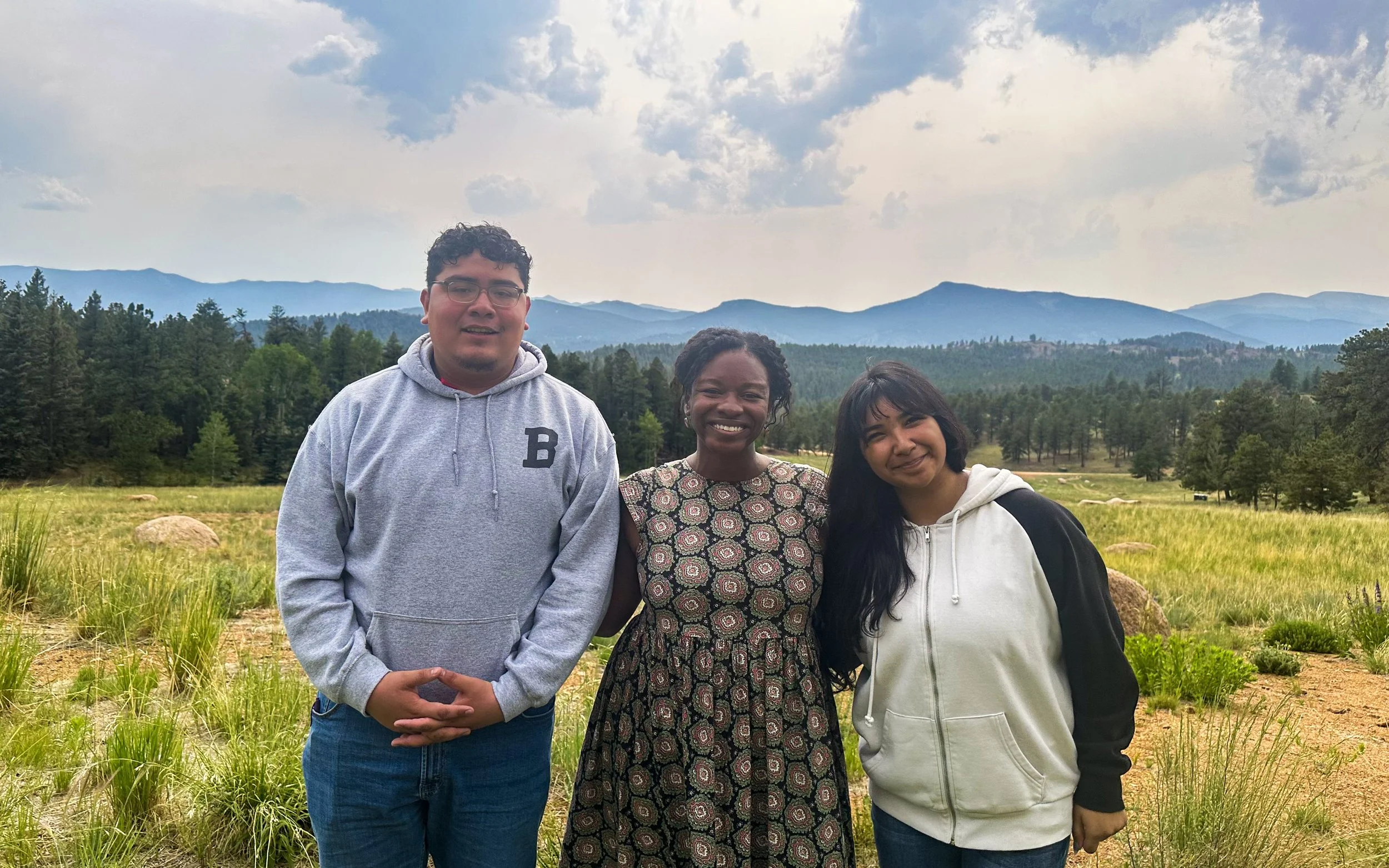
Esperanza College Prep alum (Class of 2026) Hansel Porfirio and rising senior Leslie Salgado traveled to Denver to participate in the four-day Human Connection + AI Summit hosted by The Rithm Project. Accompanied by Ednovate Senior Director of Academics Lanira Murphy, they joined educators, nonprofit leaders, and innovators from across the country to explore how AI is influencing education, relationships, creativity, and everyday life.
The summit focused not only on what AI can do, but also on what technology can never replace: empathy, trust, belonging, curiosity, and the experience of being truly known. For Murphy, the experience reinforced Ednovate’s whole-child approach and commitment to creating schools where students are deeply known, challenged, and supported. It also demonstrated why students must be included in conversations about the future of education.
For Hansel, a recent high school graduate preparing to begin college, the summit provided a rare opportunity to do just that by sharing his perspective alongside experienced leaders in the field.
“Although many of the people attending held impressive leadership positions and had incredible backgrounds, I never once felt out of place,” Hansel reflected. “They genuinely wanted to hear my perspective as a recent high school graduate. They asked thoughtful questions, listened with curiosity, and treated my ideas as valuable.”
That openness created opportunities for students to influence conversations far beyond the summit.
During one discussion, Hansel spoke with Radha Ruparell, a leader with Teach For All, a global education network. Hansel shared that AI could never replace a teacher who checks in with students, notices when something is wrong, and makes young people feel seen.
His words made an immediate impression. After the summit, an organizer shared that Ruparell planned to incorporate Hansel’s insight into professional development for educators across Teach For All’s global network.
Throughout the week, Hansel, Leslie, and other participants wrestled with questions that do not have easy answers:
How is technology changing the way young people connect?
How can AI support learning and creativity without replacing relationships?
What skills will students need to thrive in an increasingly technology-driven world?
The conversations reinforced a central idea: Connection does not happen by accident. It requires intention, curiosity, vulnerability, and presence.
“Connection means making the effort to truly listen, understand one another, and create spaces where everyone feels seen and valued,” Leslie said.
AI can help students access information, generate ideas, increase productivity, and solve meaningful problems. But it cannot replace the feeling of being noticed by a teacher, encouraged by a mentor, understood by a friend, or valued by a community.
“The question isn’t whether AI will change our relationships. It already is,” Murphy said. “The question is how we ensure it strengthens rather than replaces them.”
The summit lasted only four days, but its impact will extend much further. Hansel and Leslie returned with new relationships, new questions, and a deeper understanding of how they can help shape the responsible use of emerging technology.
They also left education leaders with an important reminder: The future of education should not be designed only for young people. It should be designed with them.