By Rachael "DeRo" DeRogatis
Principal, USC Hybrid High School
When people hear the words "artificial intelligence" and "education" in the same sentence, important questions naturally follow.
How do we ensure students continue to think critically and solve problems independently? How do we use AI responsibly? How do we make sure technology strengthens learning rather than distracting from it? What role will educators play in an AI-enabled future?
These are the questions we should be asking, and as an educator, principal, and former English teacher, I definitely understand these concerns. I also know that the best innovations in education don't start with technology. They start with people.
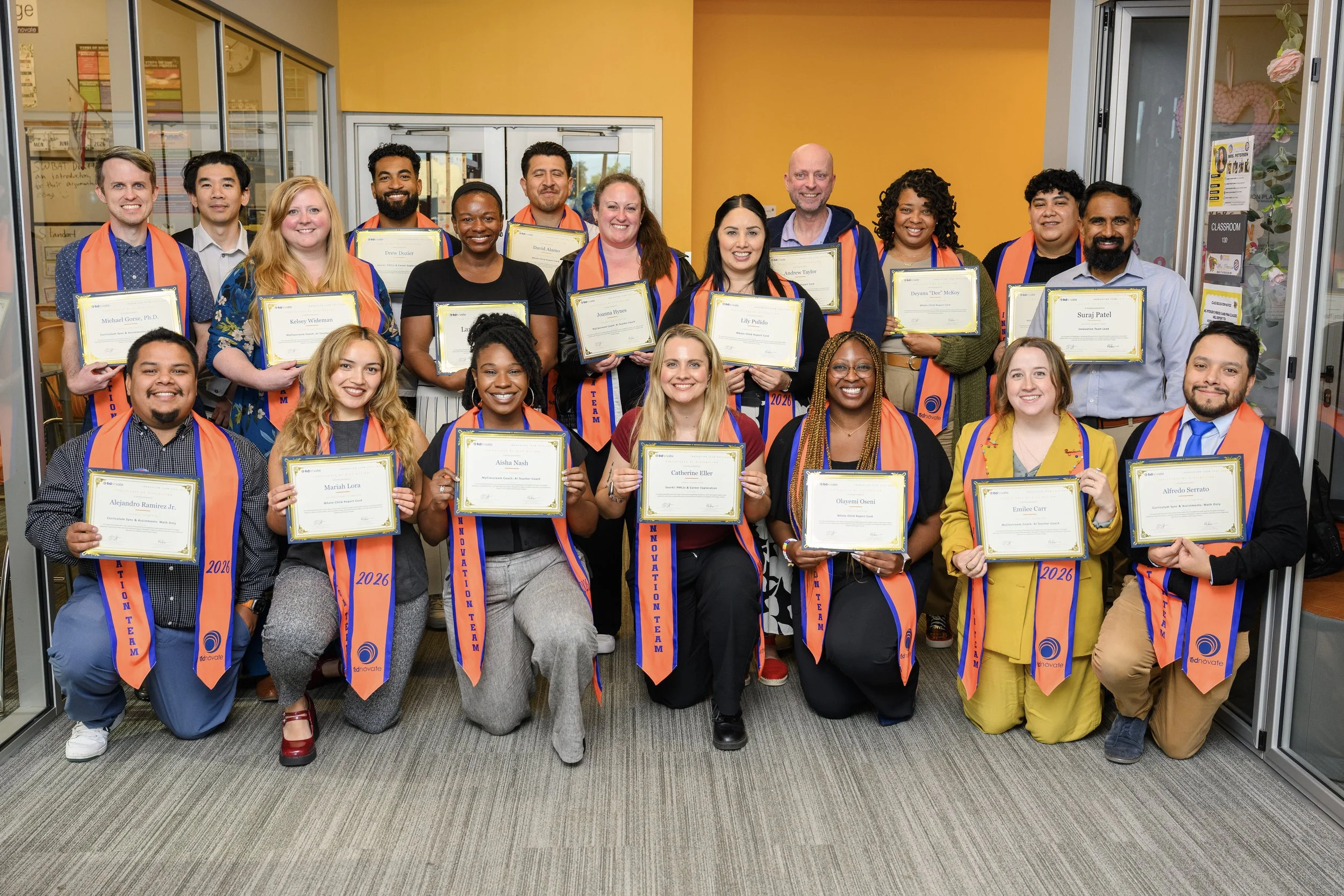
That's why this year, I had the privilege of leading Ednovate's Innovation Team, a group of educators from across our network who spent the school year exploring a simple but important question:
How can AI help us better serve our kids?
Not replace teaching. Not automate relationships. Not remove the human connection that makes learning possible. But rather, can these tools help educators reclaim time, strengthen instruction, and better support students?
The answer, we found, is yes—but only when implemented thoughtfully.
Throughout the year, educators from eight Ednovate schools piloted a variety of AI-supported tools in real classrooms. They tested curriculum planning supports, classroom coaching tools, student reflection platforms, and approaches to responsible AI use. Most importantly, they brought their experiences back to one another, sharing what worked, what didn't, and what needed improvement.
What impressed me most wasn't the technology itself. It was the professionalism and expertise of the educators leading the work.
They approached every pilot with healthy skepticism and curiosity. They asked hard questions. They challenged assumptions. They focused relentlessly on whether a tool actually improved the student experience.
This process reflects something fundamental about Ednovate.
We do not adopt new initiatives because they are trendy or because we think they’ll be a good idea. We pilot. We listen. We learn. We refine. And only then do we consider broader implementation.
As someone who has spent more than a decade at USC Hybrid High School—from founding teacher to principal—I've seen firsthand how much educators are asked to do. Teachers are planners, mentors, coaches, counselors, relationship-builders, content experts, and so much more. The demands on their time have only grown in recent years.
What we discovered through this work is that AI has the potential to reduce some of the administrative and planning burdens that pull educators away from the parts of the job that matter most—while creating more meaningful experiences for students. At its best, this work isn't about technology at all. It's about creating more time for teachers to do what only teachers can do: build relationships, provide feedback, inspire curiosity, and support our kids as they grow.
When a teacher can spend less time recreating materials and more time connecting with students, that's a win.
When educators receive more in-the-moment coaching and feedback catered toward their specific needs, that's a win.
When students begin developing the critical thinking and problem-solving skills that will allow them to thrive in an AI-enabled world, that’s a win.
And when we can accomplish those things while maintaining strong safeguards around responsible use, privacy, and ethics, that's progress worth pursuing.
The future of education will not be shaped by technology alone.
It will be shaped by educators who are willing to thoughtfully evaluate new ideas while remaining grounded in what students need most.
At Ednovate, innovation is a core part of who we are. We are constantly exploring, learning, and refining our practices in pursuit of better outcomes for kids.
Our Innovation Team spent this year proving that, when educators lead the conversation, technology can become a powerful tool for strengthening teaching and learning.
One of the most rewarding moments of this journey was having the opportunity to share our work with the broader Ednovate community during the Innovation Team Showcase on June 2. After a year of piloting, learning, and refining, our educators came together to showcase what they had discovered and to spark conversations about what responsible, educator-led innovation can look like in practice. It was inspiring to see teachers, leaders, partners, and supporters engage with the work, ask thoughtful questions, and imagine what's possible when technology is used to strengthen—not replace—the human relationships at the heart of education.
Perhaps most meaningful were the questions attendees raised about ensuring students continue to build independent thinking skills in a digitally intelligent society. Those questions mirrored the conversations our team had throughout the year and reinforced our belief that innovation must always be paired with strong guardrails, thoughtful implementation, and an unwavering focus on student growth.
You can explore the Innovation Team Showcase projects and presentations here: Ednovate Innovation Team 2026.mp4
I'm incredibly proud of the educators who took part in this work and grateful for their willingness to experiment, reflect, and share their learning with others.
Our students will need new skills to thrive in a rapidly changing world. Preparing them for that future means educators must continue learning, adapting, and innovating as well.
By embracing innovation while staying grounded in what matters most, we can help ensure our students are prepared not just for today's world, but for tomorrow's as well.
And that's a future worth building.